WeChat Official Account Cold Start: Recommendation Traffic, Search, and Monetization
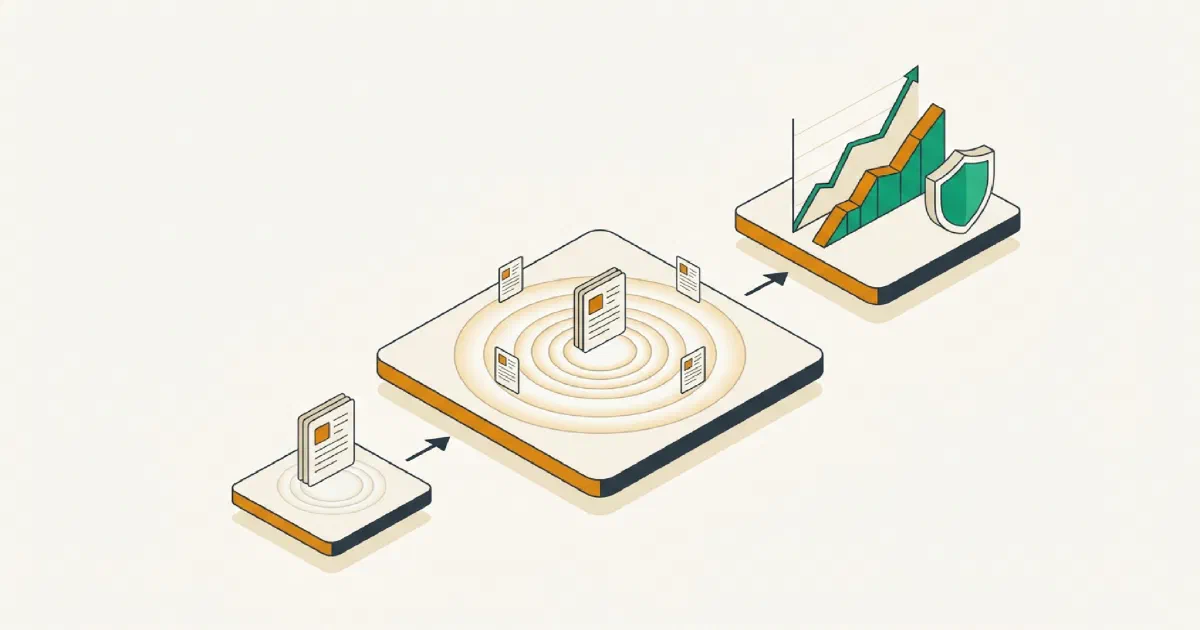
Scope: this article summarizes real conversations among WeChat Official Account operators in May 2026. It is not an official Tencent ranking document and not a guaranteed monetization playbook. Account condition, content category, platform cycles, and luck all matter. Treat the notes below as field observations, not as a formula.
The short version
- The first useful goal in a cold start is not follower count. It is producing enough content for recommendation testing and learning what the system distributes.
- Reads and ad revenue are not linearly related. Posts with similar view counts can earn very different amounts.
- WeChat Search (搜一搜), recommendation traffic, and private sharing are separate distribution paths.
- Artificial engagement, careless originality claims, and repeated deletion/reposting can create noise or risk instead of useful growth.
- The first 7–15 days are better treated as a sequence of content experiments than as a verdict on whether the account will work.
Watch recommendation traffic before follower count
New accounts often watch the wrong metric first.
Followers, reposts, private groups, and familiar readers are visible, but in the operator discussions I reviewed, the recurring word was recommendation.
Without recommendation traffic, a post can feel as if it was published into a room where almost nobody new walks in.
One operator had published for roughly half a month and saw only one article receive meaningful recommendations; later posts fell back to a few dozen reads. Another complained about getting no reads overnight and was told bluntly that this was normal: how many Official Account articles do people actually read every day?
The uncomfortable point is useful: publishing does not mean the platform will automatically find readers for you.
For the first 7–15 days, I would treat the account as a small content experiment and record per post:
- recommendation share;
- WeChat Search share;
- completion;
- interaction;
- follower conversion;
- revenue.
If recommendation traffic is absent, the discussions suggested checking three broad areas:
- whether the title is excessively sensational or contains wording likely to trigger platform review;
- whether the content is too repetitive;
- whether the account shows any review, safety, or abnormal-status warning.
If a few posts begin receiving recommendations, inspect those posts separately: what problem did they solve, why would a stranger click the title, and what did readers react to?
A cold start is not decided by one viral post. It is a sequence of samples.
Reads are not the same as revenue
The advertising program commonly called 流量主 did not behave like a fixed rate per pageview in the community reports I collected.
Examples from the discussions included:
- a little over 100 reads → slightly more than RMB 1;
- 151 reads → RMB 0.14;
- fewer than 5,000 reads → about RMB 20;
- more than 9,000 reads → about RMB 5;
- an image-style post near 100,000 reads → about RMB 18;
- another operator said roughly 2,000 reads could sometimes produce more than RMB 60, depending on ad clicks, ad type, eCPM, and content context.
These are individual reports, not an official payout schedule.
The practical lesson is that someone else’s read count cannot be converted directly into your expected revenue.
If monetization is the goal, I would look at recommendation share, completion, interaction, shares, follower conversion, eCPM, and revenue per post—not only total reads.
Search and recommendation traffic are different
Some accounts in the discussions received most of their traffic from WeChat Search (搜一搜). Others relied more heavily on recommendations.
Search suggests the content matches an explicit query and may have long-tail value.
Recommendation means the platform chose to show the content to readers who were not already searching for it.
The growth logic differs:
- Search suits tutorials, checklists, and experience summaries that remain discoverable.
- Recommendation is more sensitive to topic choice, title, timing, emotional relevance, and interaction.
For a new account, Search can be useful without proving that the platform will recommend the content broadly.
Recommendation traffic tests a different question: when unfamiliar readers see the post, do they click, finish, and respond?
One viral post does not mean the account is stable
The discussions included several sharp spikes:
- one post reached about 70,000 reads, while later posts received very little recommendation traffic;
- one image post reached around 100,000 and then stopped;
- one hot-topic post reached roughly 370,000 reads and also attracted a large amount of negative feedback.
A viral post can bring followers, create an account label, and increase confidence.
It is not evidence that the account has stabilized.
I think of cold start as the platform repeatedly testing whether an account can keep producing material it is willing to distribute and that readers are willing to finish and interact with.
So I would neither declare victory after one spike nor abandon the account after a quiet half-month.
Risk controls: avoid unnecessary manipulation
Operators repeatedly described periods that felt like throttling or risk-control states. Some reported that an account recovered after roughly a week and traffic or revenue returned.
Their suspected triggers included:
- sensitive or risky headline wording;
- excessive similarity between posts;
- incorrectly labeling rewritten, aggregated, or copied material as original;
- repeatedly deleting, republishing, or retitling posts;
- large-scale automated or matrix-style publishing;
- highly repetitive content.
One operator believed the word “免费” (“free”) in a title had contributed to a problem and later avoided it. Others felt exaggerated shock-style headlines performed poorly.
That does not prove a universal banned-word rule.
The more useful principle is that the headline is both a click surface and a platform-risk surface.
Originality labels need the same caution. If the work is genuinely original, use the label appropriately. If it is mainly rewriting, aggregation, or stitched material, claiming originality creates a different risk.
Private groups and artificial engagement are not the same as recommendation strength
Beginners naturally ask whether mutual follows, reciprocal reading, or small private groups can make a new account look active.
The community reports were not encouraging.
Artificial activity did not reliably turn into recommendation traffic and made it harder to understand what the real audience response was. Coordinated advertising interactions also create compliance risk and should not be used as a growth or monetization tactic.
Private traffic can help initial distribution, but it should not be mistaken for platform recommendation ability.
The goal is to find real readers who fit the content, not to manufacture activity inside a familiar circle.
What content should a new account test?
The discussions repeatedly returned to a difficult point: if monetization matters, writing only for yourself is unlikely to be enough.
One creator wrote authentic family-life material with obvious human detail but struggled for reach. Others used timely reinterpretations of trending topics and received more recommendation traffic. A parenting creator observed that strangers clicked when a title described a problem they did not understand. Another operator argued that middle-aged/older-audience topics plus social trends were easier to push toward very large read counts than an AI niche.
That does not mean everyone should make low-quality trend content.
It means the useful intersection is what you can keep writing × what the platform is actually willing to distribute.
Four categories worth testing were:
- Timely reinterpretation of trends. Easier to gain momentum, but vulnerable to low-quality copying and riskier headline choices.
- Long-tail tutorials. Better suited to Search; slower growth but potentially durable.
- Audience pain points. Parenting, older audiences, work, health, and relationships naturally create recognition and comments.
- Personal experience. Real details and judgment can become long-term account assets.
One community observation summarized the idea well: something casually published may solve a real problem for many people, while the post you personally worked hardest to admire may not be needed by anyone else.
Daily publishing can help until quality collapses
Daily publishing can make sense early because a new account needs samples.
No publishing means no test data.
But daily volume is not an excuse for repetitive low-information posts.
A more stable process described in the discussions was:
- Choose the topic and point of view yourself.
- Use AI to collect angles, organize structure, and edit language.
- Have a human revise the title, remove filler, and add real details.
- Schedule publication.
- Review recommendation share, completion, interaction, and revenue the next day.
One operator described a simple workflow: voice-to-text, light AI editing, then manual revision.
That preserves personal experience and tone much better than fully automated generation and publishing.
AI is useful as an editor and production assistant. It should not be the only system choosing topics or manufacturing content with no information gain.
Do not mix three monetization paths
At least three revenue models appeared in the discussions.
流量主: advertising revenue
Once enabled, articles or image-style posts can generate ad revenue.
This can create early feedback, but the payout is volatile. A high eCPM from someone else’s screenshot is not a reliable forecast.
Paid reading
Paid reading needs a follower base, hard-to-replace content, and trust.
One operator said low pricing did not work well, then priced a piece at RMB 68 and saw loyal readers pay.
That does not establish RMB 68 as a rule. The point was that cheap pricing did not substitute for perceived scarcity and trust.
Sponsorships and advertising deals
Accounts with only a few thousand reads can sometimes receive offers, but advertisers care about stable reach and a recognizable audience: what you write, who reads it, and why that audience is valuable.
A sequence that made more sense during cold start was:
- Learn how to obtain genuine recommendation traffic.
- Stabilize the content direction.
- Enable ad monetization and observe revenue per post.
- Consider sponsorships or paid reading after readership becomes more consistent.
The early goal is not “earn RMB 10,000 per month.” It is surviving long enough to understand the feedback loop.
Image posts, articles, and WeChat Channels behave differently
The community examples suggested image-style posts could sometimes gain distribution more easily than long articles.
One person reported an article with 32 reads while an image post passed 2,000 the same day. Others discussed revenue after image posts reached around 7,000 reads.
But high reach did not guarantee high revenue—the 100,000-read / RMB 18 example came from the same body of discussion.
Long articles are better suited to carrying arguments and ad placements.
Image posts may be easier to recommend in some cases.
WeChat Channels is another system again.
So instead of asking “are image posts easier than articles?”, I would ask:
- Is the goal followers, revenue, or topic testing?
- Does this material fit a long article, short image post, or video?
- What do recommendation, interaction, and revenue look like for this format on this account?
One possible combination is to use image posts for reach and articles for deeper content and monetization, but whether that works depends on the account category.
A 15-day cold-start SOP
Days 1–7: test
Publish one post per day if you can maintain quality.
Keep the broad theme reasonably consistent while varying the angle.
Avoid aggressive private-group distribution, artificial advertising interaction, and repeated deletion or retitling.
Record:
- title;
- publication time;
- reads;
- recommendation share;
- Search share;
- completion;
- comments;
- revenue.
Days 8–15: find what the platform is willing to distribute
Separate the posts that received recommendation traffic and inspect them.
What problem did they solve?
Why could the title make a stranger click?
What did readers discuss?
Was the hook a trend, pain point, controversy, tutorial, or list?
At this stage, “I personally like this” is not enough. You can keep your own direction while still respecting the data.
After day 15: build series and differentiation
If a category begins receiving repeat recommendations, turn it into a series.
A series is not copy/paste. It is repeated information gain for the same audience.
Studying successful structures can help early on. Later, differentiation matters, or the account simply falls back into content similarity.
Mistakes I would avoid
- Do not treat private group sharing as the main growth engine.
- Do not use coordinated ad interaction as a tactic.
- Do not falsely label rewritten or aggregated material as original.
- Do not repeatedly delete, republish, or retitle posts to chase distribution.
- Avoid exaggerated shock headlines and obviously risky wording.
- Do not assume fully automated AI publishing will create a durable account.
- Do not watch read count alone; watch recommendation share, completion, interaction, and revenue too.
- Do not start paid reading immediately unless the account already has scarce content and trust.
- Do not use one viral post as proof that the account has succeeded.
- Do not use the first half-month of low traffic as proof that it has failed.
I see WeChat Official Account cold start as a content experiment environment.
Every post tests several things at once:
Will the platform distribute it?
Will readers finish it?
Will they respond?
Can any monetization model work on top of that attention?
That framing is more useful than looking for one universal cold-start formula.
Comments